---
Title: What Was The Beginner's Guide About?
Status: published
Date: 2026-06-19
Category: literature
Tags:
- source-engine
- literary-themes
- meaning
- writing
- fiction-writing
- archival
- authorial-control
- media-consumption
- narrative-layers
ad: Okay. Let's do it. Let's find out if you're right.
promo_image: reversed_fool.png
---
[](./reversed_fool.png)
::: aside spoiler-warning
This entirely spoils the experience of first playing The Beginner's Guide and assumes you're familiar with the basic plot. If you're interested, please play The Beginner's Guide first. [It's a $5-$10 experience that lasts about an hour and a half.](https://store.steampowered.com/app/303210/The_Beginners_Guide/) It's so good that I wrote about it.
Ten years ago I played *The Beginner's Guide* and I was transfixed by how much it had to say.
Not just what I'd gotten from my experience playing it, but how much I could tell it had to say that I hadn't worked through yet. In a review I wrote at the time I said I wanted "wrestle it to the ground and squeeze out every drop of meaning."
I didn't quite do that. While I've had a lot of thoughts about it trapped in my head since then, no one has come along to work through it for me. I've read some articles and watched some videos, but nobody tied the bow on my feelings to my satisfaction.
So I want to get wrestling. And I want to talk about the level of depth that kept jumping out at me, but which nobody seems to have written about.
*The Beginner's Guide* is about many, many things.
For *The Beginner's Guide* in particular, one has to be mindful of how one structures the task of interpretation.
A lot of commentary focuses on the exhausting and uninteresting question of "how real is it", from people who aren't as interested in the work as their own desire to "land on a number".
But the meaning is a multidimensional space, with layers that can each be focused on.
It's an optical illusion, and "what is the game about" has different answers depending on which of the possible images you're seeing in your mind's eye.
These are all "readings": valid ways to look at the work and the different things those perspectives say.
Trying to reverse-engineer some original truth the real-life Davey Wreden was trying to express is futile, because there's just more to the work than that.
Because the game is about the dynamics of people talking about games, it's difficult to talk about it without that conversation being subsumed into the game's metacommentary.
If you don't handle that upfront you get stuck in a recursive loop of "wait, but maybe the game wants me to question myself for coming to that conclusion about it", forever. "Anything the game might be saying might also be a meditation on the fact that you think the game is saying that."[^recursive-loop]
But you don't need to resolve the game down to a singular meaning.
*TBG* is a smart enough work to handle whatever you throw at it.
If you're a critic, it's about criticism. If you're an archivist, it's about archival. If you've had a relationship go bad, it's about that.
It has something to say from every angle.
So let's go through some readings and look at what's interesting in each. Let's get squeezing.
[^recursive-loop]:
> [Innuendo Studios, "The Artist is Absent: Davey Wreden and The Beginner's Guide"](https://youtu.be/4N6y6LEwsKc?si=eP2i8d-wc4VcqtMc){: .cite}
> ...what The Beginner's Guide is trying to say is
> reeeeally fucking slippery. Because the game is just so meta, it's SUPER META!
>
> Which made me wonder whenever I tried to engage with it
> just how meta my engagement should be. For example, Davey The Narrator
> clearly suffers from imposter syndrome. The game is from his perspective, so my reflex is to identify with that anxiety.
> But by the end of the game, it's not only clear that he's done something really shitty, but that he's a fictional character.
> So my next question is, "does Davey Prime want me to question the fact that I reflexively identify with a shitty person
> provided they have a pain I recognize and they control my point of view?" and then, OR: "does Davey Prime want me to question the fact that I asked myself that question and then projected that intention on to him?"
> and then OR: "does Davey Prime want me to question the fact that I asked myself THAT question and then projected THAT intention onto him?"
> and on and on like this. We knew Davey The Narrator's intentions, But we don't know Davey Prime's.
> Anything the game might be saying might also be a meditation on the fact that you think the game is saying that.
Note: "Davey Prime" is Ian's distinction for the real-life Davey Wreden.
## Non-fiction "Reading"
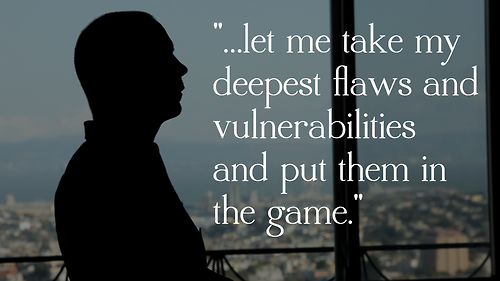
*from *
The first reading is that the story is nonfiction.
In this reading, The Beginner's Guide is a true account given by the real person Davey Wreden, HelloCakebread, who had just released The Stanley Parable and would later go on to make Wanderstop.
(For this article, I'll always call the real person "Davey Wreden", including the last name.)
Davey Wreden is narrating, but there is no _author_ of this story because the story is real.
The real author is the implied author is the narrator.
There is no fictional narrative scope between you and the narrator; the only fiction is in Coda's games themselves.
This isn't true. *The Beginner's Guide* is a work of fiction.
But you're supposed to believe it's real at first, before the illusion cracks apart.
How long that lasts depends on how successful the game was in playing a trick on you during the intro.
*The Beginner's Guide* starts with Davey directly addressing the player and introducing himself as Davey Wreden, even giving out his personal email[^email] address:
> **Davey in *Intro*:**{: .cite}
> Hi there, thank you very much for playing The Beginner's Guide. My name is Davey Wreden, I wrote The Stanley Parable, and while that game tells a pretty absurd story, today I'm going to tell you about a series of events that happened between 2008 and 2011.
[^email]: A nod to what Gabe Newell does in developer commentaries, which made me throw up a little in my mouth when I heard him do it in *Alyx* (2020).
By focusing consistently on the fact that these are constructed video games, and that you're a player navigating a virtual world, Davey is able to step out from the normal narrative scope of a narrator. There is (supposedly) no roleplay or suspension of disbelief; you know you're playing in a digital fiction.
Davey seems to become less fictional because he's there with you, looking over your shoulder, intimately talking with you about how the two of you are playing a video game.
But, for me, the illusion ends a few sentences later in the same map, when Davey says he's publishing someone else's creative work without their involvement, knowledge, or consent:
> **Davey in *Intro*:**{: .cite}
> And that's why I've taken this opportunity to gather all of his work together, is because I find his games powerful and interesting, and I'd like this collection to reach him to maybe encourage him to start creating again.
That obviously wasn't happening, so this story had to be -- at some level -- fictional, or a fictionalization of something.
Regardless of *when* this happens, you're supposed to realize this at some point. A beat of the story is the moment the player realizes this. *TBG* shares a significant amount of DNA with The Stanley Parable, and part of that is creating little moments of realization where the game led you to think one thing and then reveals you were wrong.
By the end of the game, when Davey apparently realizes his mistake and then Davey Wreden releases the game anyway, this should be assured.
"Nonfiction" isn't a valid reading of the game because it's factually wrong; it makes assertions about our shared reality (not fiction) that are demonstrably incorrect.
The Beginner's Guide is a work of fiction.
This has been confirmed directly by the real Davey Wreden[^fiction], but it can be independently proven without relying on the themes of the work or making assumptions about Davey Wreden's character:
[^fiction]: See [Tone Control 20: Davey Wreden](https://soundcloud.com/idlethumbs/davey-wreden), 1:18:50-1:28:00
- _Notes_ (April 2009) makes a direct reference to _Spec Ops: The Line_ (2012).
- `linked_portal_door`, used in _Island_ (December 2010) and other maps, wasn't included in Source until Portal 2.
- _Machine_ uses `func_holeable`, which is actually an entirely new entity in The Beginner's Guide that required SDK access to write.
- Likewise, the dialogue system used throughout is not "fashioned out of the engine's chat capabilities", it's a bespoke scripting framework written for this game designed to look like Source chat.
I mention this in the context of a semi-infamous review[^lauradale] by Laura Dale which left room for the legitimacy of a fully non-fiction interpretation.
The accommodation it makes for this error extends as far as *refunding the game* if the player believes, wrongly, that the real Davey Wreden has done something unethical.
[^lauradale]:
> [Laura Dale, "The Best New IPs of 2015"](https://www.destructoid.com/the-best-new-ips-of-2015/){: .cite}
> _The Beginner’s Guide_ is a weird game, in that it caused a huge splash upon launch, with many reviewers hesitant to say anything at all about it. People were affected by it, not always positively, and it clearly had a strong impact on many players.
>
> A few months on, it’s still unclear how genuine the narrative told is, or how much we can rely on the narrator of the experience. But if you have around and hour and a half and want to be floored by an unexpected narrative, you’ll be hard pressed to do better than _The Beginner’s Guide_.
>
> Just make sure to complete it within your Steam refund window, as there are legitimate reasons to want to return this game after purchase.
> ...
> _If you fall into the camp that view this as non fiction, an aspect of the narrative implies that the content is stolen wholesale from another developer. While I paid for the game and believe doing so is a morally acceptable action, what I wish to make clear is that if players disagree with my reading of the narrative and feel I reccomended them an experience they didn’t morally agree with, there is a financial way to back out of that purchase._
>
> _This is not an encouragement to back out of payment due to length, but simply me pointing out that if you finish the game and believe the narrative to be non fiction, and if you believe that you purchased stolen goods, there is a way to avoid your money remaining with that developer in this very specific case._
I don't at all mean to disparage Laura personally, but this incident is a good example of why I come down so hard on the idea of this being an "illegitimate" reading.
Literary analysis should be given enormous leeway, but that ends at reality.
When you're making factual assertions about our reality, not a fictional reading, I think there's a responsibility to seek the truth, and not make accommodation for permanent misunderstanding. (Especially if that misunderstanding is about whether someone committed a serious crime!)
In fiction, a wide plurality of differing and even conflicting interpretations can exist at once. In reality, no amount of fictional interpretation allows you to substitute provable facts with ones you've imagined.
Ironically, this whole conversation is something *The Beginner's Guide* is about, too;
don't let your assumptions about a work of fiction convince you that you know something about the real author.
This is one of the clearest arguments made in the next reading, the literal interpretation.
## Literal Reading
In this reading Davey and Coda are fictional characters[^how-fictional-though], written by the author of the story, the real Davey Wreden. Wreden is the real author, and Davey acts as both the implied author and a character in the story.
[^how-fictional-though]: You can include the variations of "Davey and Coda are fictionalized versions of Davey Wreden and a real other guy" in this, although I think the better understanding is that both characters, taken literally, are wholey fictional. Either way, we're talking about two fictional characters here and their wacky adventures.
(For this article, I'll always call the fictionalized person "Davey", without the last name.)
Within this fictional narrative scope both Davey and Coda are real people.
Davey -- although ultimately revealed to be an unreliable narrator -- is describing a relationship these two characters had in the story.
So, what's this story about?
### Resuscitating a dead author
*The Beginner's Guide* is about the question "can we know an author through their work?" This is something the text directly and repeatedly invokes.
It is the main premise of the game's remarkably short trailer:

> **Trailer**{: .cite}
> Let's say you sit down at a stranger's computer. You start opening up files and looking through stuff and eventually you come to a folder that just says "my work".
> So you open it, and you click on a random file, and it's a video game that looks like this.
> If you had to guess what would you say you know about this person right now?
> ... Take all of these images, hold them in your mind and now try to imagine without ever having met this person who they are.
> Okay. Let's do it. Let's find out if you're right.
In the first level, *Intro*, Davey explains again that his goal is to use these games to understand the person who created them:
> **Davey in *Intro*:**{: .cite}
> And it kind of makes you wonder: What was going through his head as he was building this?
> This is what I like about all of Coda's games. Not that they're all fascinating as games, but that they are all going to give us access to their creator.
> I want us to see past the games themselves, I want to know who this human being really is,
> and that's exactly what we're going to do here.
Davey spends the game chasing this.
His answer is "yes"; Davey plays Coda's games with the belief that constructing a narrative about the author is the primary purpose of consuming their work.
> **Davey in *Notes*:**{: .cite}
> ...this idea is really seductive to me!
> That I could just play someone's game and see the voices in their head and get to know them better and have to do less of the messy in-person socializing.
> I could just get to know you through your work.
> I think this is why I always liked Coda's games so much, is because it felt like they let me have that connection.
This ends poorly.
In literary theory, "Death of the Author" is the idea that the meaning(s) of a text come from the work itself (mediated through the experience of reading it) rather than the author's original intent.
It argues against trying to explain work by analysis of the person of the author, if the work even has an author at all.
Rather than try to use the text to deduce the author's intent,[^intentional] the reader can find meaning -- or a multiplicity of meanings -- directly in the text.
[^intentional]: See also [The Intentional Fallacy](https://literariness.org/2016/03/17/intentional-fallacy/)
This is a central conflict in The Beginner's Guide -- whose working title was actually *The Author*.
*The Beginner's Guide*'s story is mediated through Davey's literary analysis.
Coda himself comes to us dead. Absent, uninvolved, understood only through work he did not give us and did not intend for us to experience, let alone understand.
And Davey absolutely refuses to understand any of these games through any lens other than his imagined authorial intent.
Coda isn't just absent from *The Beginner's Guide* (he's not providing the commentary, Davey is), he's stopped making games entirely. Davey wants Coda to "start creating again" to bring Coda back into his life, something he's upfront about in the intro:
> **Davey in *Intro*:**{: .cite}
> In 2011 that was it, he made his last game and then he hasn't made another one since.
> And that's why I've taken this opportunity to gather all of his work together, is because I find his games powerful and interesting,
> and I'd like this collection to reach him to maybe encourage him to start creating again.
The author is dead and Davey wants to resuscitate him.
*The Beginner's Guide* is about the conflict caused by this insistence.
### Davey misrepresents the work
Throughout the game Davey gives his interpretations of Coda's work.
This is a fundamentally flawed effort, as Davey's motivation in his analysis is always to understand Coda-the-person instead of the actual games or what Coda was trying to say with them.
Instead of self-correcting, Davey insists on presenting everything within the context of his understanding of Coda, which results in him severely misrepresenting the work to the viewer.
In *Tower* it's revealed Davey has been making significant changes to the content of Coda's games.
In these extreme examples, the ability of the presenter to misrepresent work is literalized by crossing a boundary and altering the work. Davey goes beyond his role as a presenter and makes changes to the levels themselves that change their meanings.
Most notably Davey inserted the lampposts, which the reader understood as a symbolic language key to Coda's work.
Because these provided a thematic and narrative structure, when they are revealed to be modifications it seems to undercut any understanding about the games the reader has tried to develop.
Not only do these lampposts turn out not to be Coda's, their presence subverts one of his existing themes.
Coda has this theme of a continuous journey that subverts the assumption that the level end is the end of something. This is directly in the text, with "you are entering" and "you are exiting".
Including a real end doesn't just taint the game, it subverts a specific theme of the work.
Maybe it went over Davey's head, but now the viewer doesn't get a chance to understand at all.
It's unclear to what extent the collection has been edited by Davey, but the idea that we can't trust the games to be unadulterated highlights the power Davey has to misrepresent the work.
#### Voice
This misrepresentation of the work is there throughout, even without the extreme examples of direct editing.
Since Davey is the only voice in the conversation, he has unilateral power to exclude topics from discussion by simply not commenting on them.
The player can't directly challenge him; any challenge comes from Coda himself, via the work. As with most things in *The Beginner's Guide*, this is present throughout but culminates in *Tower*, with physical text in the level directly rebuking Davey.
For the whole game, Davey is "talking over" Coda in the form of narration.
Source games have a "commentary node" system that allows developers to unobtrusively supplement a game with commentary. These nodes can even make marked, temporary changes to a level to demonstrate something.

*Davey could have made this*
This is not what Davey uses. Davey's commentary is persistent and mandatory.[^mandatory-commentary]
It often feels like it drowns out Coda, completely polluting the experience Coda meant to convey.
[^mandatory-commentary]:
You actually can play versions of his games closer to Coda's original intent, if you want.
Nothing tells you this, but after you finish the game, you unlock the option to set "Narration" to "disabled" in the audio settings. This turns off Davey, but also turns off any "help" Davey gives you as part of the narration flow.
This doesn't include major edits though; the lampposts are still there, *House* doesn't loop, etc.
The incredibly slight glitch in on the title screen (which appears to be the "real" title seen in promo art) alludes to the idea that Davey is in some way fighting back against this. As if even after Davey "left", this is still fundamentally at odds with the "package".
Davey's edits are not marked or temporary. Davey has flattened himself into the presentation of the work, collapsing the commentary and the work into one mixed artifact.
In *Tower*, when we finally see messages directly from Coda to Davey, Davey talks over each wall as soon as it comes into view. You need to wait for Davey to finish talking before you can read what Coda said. Even here, when we've gotten the closest we've gotten to hearing from Coda directly, Davey has to inject his thoughts first.
/// aside | furthermore
An unused line that was cut[^cut-content] from *Tower* has a brief monologue from Davey revealing the importance he placed on acting as an active guide:
> I did that. How could I have done that if I didn't understand your work reasonably well, right? This is it! This is the proof. I did it. I want you to see this. I want you to know that I led someone, that I gave this person an answer. That I called, and they responded. I'm not alone here. In this space I have someone. I have a companion. They've stood beside me. That's all that I was asking of you this whole time was just to stand- stand beside me. To tell me that I wasn't wrong. To put some form on this infinite chaotic black. I just wanted you to assure me that someday I would get it. That I would understand. I wanted you to tell me that I'm going to be okay!
Davey isn't just making the work accessible, he wants to play Virgil. Leading someone through the work was a way for Davey to feel important and validate his ability to interpret the work.
///
[^cut-content]:
The Beginner's Guide ships a significant number of old and unused files from an older revision of the game. These describe a significantly more difficult and more self-referential game, if you can believe it.
I don't know if leaving these visible was intentional or not. I am not a stranger to accidentally shipping files in Steam builds in -- The Stanley Parable actually distributed *my* work files, believe it or not.
But there's reason to believe it might be. The files were never removed, among other things.
Since these files describe a significantly different game with different themes, I'll try not to draw from these or try to cohere them into one reading. I think they're from a different draft, and looking at them isn't primary textual analysis. "I think we should talk about his games for what they are rather than for what they're not", etc.
There are some things that beg for me to mention their connection to cut content, but when I do this it's only as *potential* context.
#### Skipping
There's a lot of skipping in *The Beginner's Guide*. Not enough that you feel like you missed out on any content, but enough that it's noticable. Even the menu has a skip button.
There's a moment in *Whisper*, Coda's first real game, when you find a maze and Davey skips you past it. I want you to remember exactly what that felt like:

I remember being thankful for this on my first playthrough. How nice, to be guided through something difficult by someone considerate of your time and attention? To "the part that's interesting."
The two of us are here to see the games, after all. There's no point in wasting time with... huh.
Of course, everything skipped was designed by Coda, and skipping it is subverting the intended experience.
A moment later, the catharsis of the level is floating above the level and getting a view of the maze from above. It's not that hard. You'd get a moment of reflection here, to step back and close the door on your work now that you can see it from above... except you don't.
I think this skipping is something that a presenter could do thoughtfully, but Davey doesn't.
If you listen to the narration, there's always a smugness or a chuckle in Davey's voice when he skips something. As if Coda is obviously "wrong" to have demanded the player do something, and that's a joke he and the player are in on. It's arrogant.
There's an attitude that a quick description is all that's needed to experience the work. A maze isn't experienced, it's just "there's a maze".
An "okay, you get it" gesture.
It's enough to know what a maze is and know that there's one there. In *Stairs*, it's enough to feel what having your speed reduced feels like for a moment before you cheat back to normal.
What matters is getting through.
There's this key line in *Notes*:
> **Davey in *Notes*:**{: .cite}
> Feel free to skip over any of these notes if they're not doing anything for you, nothing extra will happen if you read all of them.
"Nothing extra will happen if you read all of them" is a story into itself.
These notes are all text written by Coda, and they're the whole point of the level. Nothing needs to "happen" except reading the text and thinking about what it's trying to say.
And we're fully denied whole games in *Escape*. Davey blinks us through them, but who knows what they had to say?
These are all things he doesn't think have meaning. Elements like the notes *are* saying something, and all Davey can come up with is maybe Coda's "lonely". And that's a problem that could be solved with more Davey.
Maybe he's skipping them *because* he doesn't have anything to say about them, because they don't fit into his analysis. They show the cracks in Davey's ability to guide you, and he doesn't want to leave room in your mind for that.
Or maybe Davey is convinced he's being helpful and efficient. But in trying to help he reminds us that what we're seeing is filtered through his values and conceptions.
The way Davey's judgments are forced on the player -- when a quick cheat eliminates something from our experience entirely -- emphasizes the value judgment intrinsic in experience. These are questions: What is needed, and what is not?
What parts of the work are significant and which are filler?
Which moments are the mundane processes of gameplay and which moments are what Coda cared about?
These questions are usually implicit in reading a work, and we don't even notice them as part of the process.
The skipping highlights the fact that those are questions that are being asked by having someone else answer them for you.
### Davey misunderstands the work
The choices that result in misrepresenting the work come not from deceptiveness, but from Davey misunderstanding the work himself.
Davey is seeking this "meaning" he finds in Coda's work, but that comes expense of what Coda's games actually are and what they're trying to say.
Throughout all of Coda's work, we see Davey rejecting or refusing to consider aspects of the work that don't fit his interpretation.
It's unclear how deliberate this is; Davey seems to be operating from a deeply emotional need, and could be in denial rather than self-consciously manipulating his view.
Regardless, as a result, Coda's games are full of things that go unexamined and unanalyzed. (Not once does Davey mention Coda's interest in tarot!)
The obvious example of this is the author dots. Coda includes this pattern as a decal in every one of his games, but Davey conspicuously refuses to comment on them.

*I know what they're from, but I'm not telling.*
In *Tower*, Davey admits "I asked him please to just tell me what the 3 dots mean. And he wouldn't." He's aware of the dots and aware that they mean something he doesn't understand.
His response is to cut them out of his analysis entirely; to refuse to talk about them because they don't fit his narrative.
#### Femininity
Coda's games often tie into themes of femininity, another theme Davey fails to engage with.
As early as *Backwards*, the levels are talking about the journey of a woman -- "the past was behind her."
The person sobbing in the prison from *Escape* -- and the only modeled character in the entire game -- is shown on-camera to be a woman.
The background ambience in *Island* is a woman crying, shown to be this woman again.
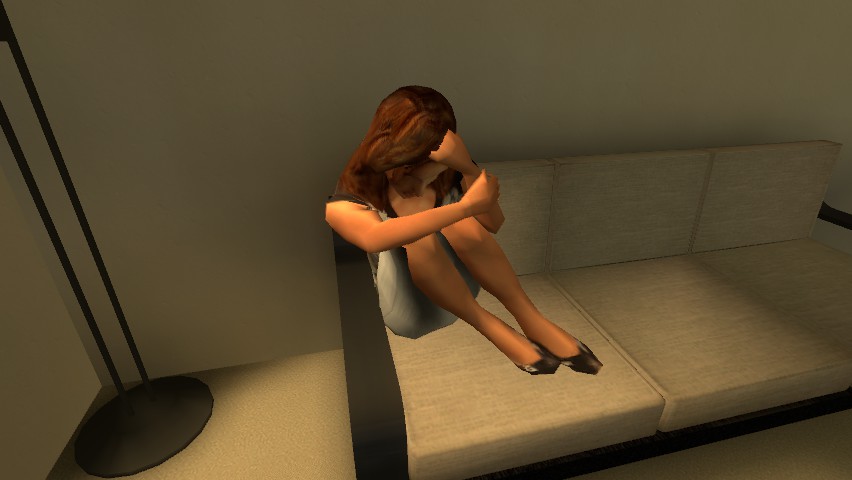{: .size-s}

In *Machine*, when we confront the machine and speak to the press, the guard NPC addresses the player character as ma'am.
In *Lecture*'s unused dialogue, a speaker describes the self-referential work of a female artist.
Occasionally this overlaps explicitly with the idea of sex work.
Coda's title slide for *Escape* is "Pornstars Die Too".
*Stairs* has a hidden audio cue in the corner, internally titled `Sex_worker_emitter.wav`.[^swemit]

*Tower*'s background music is this female vocal track:

*Tower* also has background ambience of moaning that's borderline explicit, especially given the internal name `Sex_stem`

[^swemit]: Sampled from ["Goin' Down" by The Party](https://www.youtube.com/watch?v=ouQTGR4p2mI)
Given the cues in *Escape* and *Machine*, combined with the continuity between games shown in *Entering* and *Exiting*, my interpretation is the player character in Coda's games is a woman. Perhaps the same woman seen in *Island* trapped in the prison from *Escape*, internally referred to as `sadgirl`.
All of this directly contradicts Davey's interpretation of the games. He's convinced they're autobiographical and that Coda is speaking directly about himself:
> **Davey in *Island*:**{: .cite}
> If the last game featured Coda talking explicitly about his creative frustrations, this one turns it up to eleven.
But Coda is consistently referred to as male.
Even without `sadgirl`, Coda spends *Machine* talking about his creative frustrations through an explicitly female point-of-view.
This is a glaring contradiction.
It's possible Coda's reason for using a female POV was just to create this distinction and rule out Davey's interpretation without compromising the work by giving the player a more specific identity.
/// aside | tangent
#### 🏳️⚧️??? {: #egg}
There is a surprisingly strong trans reading of Coda, although I'm not arguing this was intentional.
Given this recurring theme of femininity in Coda's work, you could imagine Coda trying to assert an identity and having his expression drowned out by outsiders who want to talk about them themselves.
*Whisper* has a line of voiced dialogue -- the only voicework in Coda's games -- and it's a woman. No mention of any voice actor is ever given; is this Coda?
But very overtly, Coda is obsessed with the idea of transition. The fear of transition and moving into an uncertain future in *Backwards*, the difficulty of transition in *Stairs*, the liminal space in the two door puzzle, the comfort of stagnating between spaces in *House*. The dialogue trees[^trees] in *Escape*:
> ***Escape***{: .cite}
> Do you feel any different?
> Some times I'm scared I'll get out and then things will be exactly the same as before.
>
> (Choice): No, I'm really the same person now as I was back then.
>
> That's the worst thing I can imagine!
> Oh no, that's awful!
>
> (Choice): The problem is that you don't actually know who you are right now.
[^trees]: The dialogue trees in Coda's games are complex. Davey ought to be making these games accessible by making these trees explorable, but he's not doing his job. [Here's the full prisonphone sequence.](./prisonphone2.svg)
If I were to summarize Coda's work as being about any single thing, I would answer "transition".
Venturing into paratext,[^cut-trans] there's cut dialogue from the cut *Interview*[^interview] level that's perhaps more direct about this. As you keep asking the interview to stop talking they ignore you, and the last of their questions is:
> One last question before I go:
> Are you a boy or a girl?
Combine the focus on womanhood with the fear of transition and the demands to explain yourself to others and the lack of a voice, and there's your story.
///
[^cut-trans]: The decision as to whether material being removed is a deliberate step away from these themes or masked authorial intent that confirms their relevancy is left to the reader.
[^interview]: [Here you go.](./unused_interview.svg)
#### Avoidance
But it doesn't work.
Even when themes that don't fit into Davey's narrative are impossible to miss, Davey never comments on them. One interpretation is that he's not noticing it; it's going over his head because he's looking for something else.
But there are also indications he's intentionally avoiding the subject. Especially of note is his admonition in *Stairs* guiding the player away from the hidden audio cues in the corner:
> **Davey in *Stairs*:**{: .cite}
> I know it's tempting but there's actually nothing over here. Sorry!
This reads to me as self-motivated avoidance. Davey has his own interpretation of the work that he's deeply invested in, and he doesn't want to be challenged.
The misdirection in *Stairs* shows at least some awareness of this, whether conscious or subconscious.
Note that Davey's avoidance of these topics doesn't extend to removing these elements from the level, something he could do very easily. I think this is strong evidence that -- in this literal reading -- Davey's direct edits to the games are minimal. (Although, again, I think this will make more sense when read metaphorically.)
#### Point A to Point B
Despite his infatuation with Coda's games, Davey never seems to get anything out of them.
In the intro Davey says the work "pointed him in a very powerful direction", but he never gets anything out of it, never gets meaning or a direction out of Coda's work.
Instead he obsesses over Coda as a potential source of something that might yield meaning later.[^fake-depth]
[^fake-depth]: To me, Davey's whole relationship with meaning reminds me of [fake depth](https://blog.giovanh.com/blog/2021/05/02/wd-gaster-and-fake-depth/).
Davey is chasing "meaning" as a goal without any of the substance, like the points defining a line without the journey of the line between.
It's the same mentality that leads him to skip over things.
That need for destinations is epitomized in the lamppost, which provides the semiotics of meaning without the substance.
The lampposts are the literal points of light for Davey to cling to.
> **Davey in *Down*:**{: .cite}
> I'll tell you what I think, I think up to this point he's been making really strange and abstract games with no clear purpose,
> and maybe you can only float around in that headspace for so long.
> Because now he wants something to hold onto. He wants a reference point, he wants the work to be leading to something.
> He wants a destination! Which is what this lamppost is, it's a destination.
Davey hasn't gotten a clear purpose from Coda's games so far and needs something to hold on to. Davey, not Coda, wants the work to be leading to something, and for it to have a clear destination. The lampposts provide a framework that games can be fit into.
A feeling of completion, placed where he feels he should be feeling more complete.
In other words, the lamppost is what Davey thought the two door puzzle was for.
> **Davey in *Notes*:**{: .cite}
> In each of his games, after exploring a theme that he might find difficult,
> Coda can place this puzzle that he knows has a reliable solution, he understands exactly how it works,
> and so it gives him a simple mechanism for moving on.
>
> And because there's this dark area between the doors, a space between spaces,
> before you move on you get to pause
> just for a moment
> a few seconds to reflect on and let go of the events that lead you here.
> To step back and connect the pieces together, to grasp at that elusive bigger picture.
>
> And then you face the next thing.
The lamppost provides light. It's reliable, you understand exactly what it's for, and it gives Davey the chance he's looking for to grasp at the bigger picture.
### Unhealthy dependence
Davey's behavior stems from his psychological dependence on Coda.
Davey's desire for access is core to everything, from his story with Coda to the act of releasing the collection to us.
He was afraid of losing access then and he's trying now to bring Coda back.
This turns out to be deeply unhealthy. Davey is like an addict, desperate for access to Coda. This is revealed throughout the game but finally made explicitly clear in *Tower*.
> **Davey in *Tower*:**{: .cite}
> I just felt so strongly that if I could have connected with him,
> that if I could have somehow made his work my own, that I would finally be once-and-for-all happy.
> I needed to see myself in someone else.
> I needed to be someone other than me.
> ...
> And then you stopped, and I didn't have anything left to show people.
> And I just had to be with myself. And as soon as that happened there was no feeling at all.
> Nothing. Less than nothing.
> What does that mean?
>
> I'm afraid that I did something really stupid because I don't like myself.
> ...
> Please, I need to feel OK with myself again, and I always felt OK as long as I had your work to see myself in. ...
> I'm.. I'm sorry. I'm sorry! Please start making games again, please help me, please give me some of whatever it is that makes you complete, I want whatever that wholeness is that you summoned out of nothing and put into your work, you were complete in some way that I never was.
> I want - I want to know how to be a good person, I want to know how not to hate myself. Please!
The main thesis of *Lecture* is to condemn this kind of dependence.
Coda paints this short, clear picture illustrating how someone might seem like they have the answers, might be presented as if they're the supreme authority, but they're not.
You assume someone is perfect, and fufilled, and has everything you need to be complete. But it's not true.
> ***Lecture*:**{: .cite}
> I want your friends, the people in your life to look at you and think:
> "wow, this person is a better human being than I am."
> Right now, who do you think about that way in your own life?
> Who do you know who is so well developed as a person that they make you feel disgusted with yourself?
> Compared to whom, you feel useless.
> Selfish.
> Ungrateful.
> I intend to make you into that person.
> ***Tower*:**{: .cite}
> You desperately need something and I cannot give it to you. I literally do not have it.
There's a long arc, all the way from *Notes* to *Machine*, of Davey psychoanalyzing Coda.
Davey interprets Coda as being depressed and cutting himself from the world in a self-destructive spiral.
> **Davey in *Mobius*:**{: .cite}
> Like I said, I was getting concerned.
> First off, he's never been this explicit in his work about exactly what he's thinking. So where's that coming from?
> But then even weirder, his work has potentially stopped being an outlet for him.
> Not like he's having trouble iterating on ideas, but he literally just can't think of new ideas any more.
> And in person he was being a lot more distant than usual,
> you know how sometimes a person will just deflect anything that you say in order to keep themselves disconnected all the time? It was that kind of thing.
> Here was the point in my relationship with Coda where I really started to wonder if he needed my help in some way.
But Davey is operating from emotional reasoning -- not good literary analysis, or insight into his friend, or anything fact-based. He's not reading, he's trying to satisfy his own emotional needs using the work.
> **Davey in *Island*:**{: .cite}
> Now, put yourself in my shoes playing this.
> Here's a friend whose work is exhibiting signs of struggle, frustration, anxiety, depression even.
> And yet still he keeps making games. He keeps throwing himself into the grinder even when he clearly doesn't have the energy for it anymore.
> Why? What is it for?
> ...
> Seeing this game at the time that he made it, it looked really unhealthy to me.
> I was watching him do this to himself, and I hated it. I hated seeing him so trapped.
> Video games are not worth this amount of suffering.
>
> This is someone I really cared about, and I used to get so much joy out of seeing him create,
> for him to suddenly become angry and frustrated like this, it was the worst thing for me.
This leads to one of the darkest parts of the game.
It's (in my opinion) strongly implied that Davey's end goal in psychoanalyzing Coda isn't the health of his friend, it's his productive output and Davey's access.
> **Davey in *Tower*:**{: .cite}
> And it's scary for me, the idea of Coda cutting himself off entirely,
> just saying “that's it, that's the end of the conversation,” not giving me any way to fix the problem.
> I feel like a failure I guess, when I can't...fix the problem.
What Davey rationalizes as concern for Coda's "health" is actually driven primarily by his self-motivated desire for access:
> **Davey in *Theater*:**{: .cite}
> The game ends with this eerie premonition of what's going to happen next in Coda's life.
> The solution to social anxiety, to fears of having to perform and having to chase success,
> the answer for Coda is to withdraw. To hide himself away.
> Which is what leads to scenarios like the stairs that slowed you down several games ago,
> where it becomes harder and harder to access Coda's inner landscape because he keeps retreating,
> he keeps backing away from possible connections to anyone other than himself.
> And to be honest I didn't consider it very healthy, when I first played this game.
> It looked to me like he was trying to justify the idea of disconnecting yourself from the world,
> and that wasn't what I wanted for him or for his games. Because I feel like a lot of his games are inviting me to connect,
> to connect with this person, to bring him closer.
What's driving all of this behavior is Davey's fear that he'll be cut off himself.
That insecurity leads to trying to manipulate Coda into being more productive, to engage with the world more, to share his work.
This is Davey's worst sin: trying to change another person's life for this fundamentally self-interested reason.
### Tension between presenter and artist
The philosophical conflict between Davey and Coda is a topic that fascinates me, and I'm disappointed the work didn't leave much room to explore it.
The reveal that Davey was violating Coda's explicitly stated boundaries and lying to the player about the extent of his changes is a betrayal that turns the player soundly against Davey.
This narrative beat cementing Davey's position as the story's villain eclipses the very interesting and unresolved philosophical conflict between the two.
This conflict is the tension between the values of the presenter (curation, accessibility) and the values of the artist (intent).[^rights]
There is a negotiation of control between these two roles.
Davey -- while lovable -- clearly fails to strike the necessary balance and ultimately fails as presenter.
But the reason for this is not as simple as just "modifying the work" or "releasing unreleased games."
[^rights]: [The extent of the rights a creator has over their work is endlessly fascinating to me, obviously.](https://blog.giovanh.com/tag/ip/)
The Beginner's Guide, in-universe, is not Coda's release of his games as presented by the author. They are presented by Davey, and Davey has a role in directing the *presentation* of the work.
The work, as it describes itself, is *The Beginner's Guide* to Coda. It is a transformative work.
As for transformative work in general, Coda loves it.
His games use *Source*, an ecosystem obsessed with modifying itself, platforming mods that are games and games that are mods every which way forever.
Coda's first game is a Counter-Strike map.
Davey calls Coda a game designer, but Coda is a mod maker.
*The Beginner's Guide* makes a point of using Source, and talking about Source, and talking about its choice to use Source, and has a love of building and iterating built into its DNA.
The problem is Davey isn't honest about how transformative *The Beginner's Guide* is.
But outside the explicit deception, Davey has been very honest about his non-neutrality from the start. He does not hide himself as an anonymous narrator, he highlights himself as an individual with his own thoughts and opinions, with a historical role in the story.
As Davey continually argues, curation is required to show Coda's work. This is true: these games literally cannot be seen without it, both in the micro (thematically important aspects of the games required modification to see) and the macro (the games were unreleased).
Davey's presentation feels tainted, but Coda's presentation is a complete absence of art. No game, no material, no themes, no work.
Coda's perspective and his feelings of violation are explained in *Tower*, but Davey's argument made throughout the game -- that games needed to be *playable* -- is a coherent counterargument, and in my mind is a strong one.
When you played the game, did you wait in *Down*'s prison for the full hour?
If Davey had smugly let you sit there, completely able to open the door but choosing not to, wouldn't that make him a jerk too?
It's a mistake to think that the author necessarily sits on the other extreme of this position, using their self-appointed position of authority to rule over the player.
In *Mobius*, Coda directly tells the player they must keep their eyes closed in order to play the game properly. This obviously doesn't work, in a way that indicates Coda *wants* you to defy authorial intent here. The ship is about to crash, and keeping your eyes closed inevitably leads to a failure state -- the only failure state in any of Coda's games. Coda tells us one thing and seconds later tells us "no, that was the wrong thing to do."
And of course the author doesn't have ultimate control -- experience is generative, playing a game particularly so. You are creating your own experience.[^generative] It's guided by the author, but it's ultimately not something the author can exercise direct control over.
[^generative]: This, too, requires moderation between extremes. See also [Sufficiently Human, "The Customer is Often Wrong (FUCK THE PLAYER)"](http://web.archive.org/web/20210316001935/https://sufficientlyhuman.com/archives/599), an argument for the other direction. (Of course, I would argue "queerness in games" also includes the individual asserting agency even within the context of a prescriptive system.)
In Coda's case, the player[^player-you] is trespassing by playing these games at all.
When you play the game you hear the intro, hear Davey say this wasn't done with Coda's involvement, and keep playing. By not exiting the game in a huff you make a little micro decision that the value of seeing these games outweighs the author's interest in controlling them.
You take the position -- I believe, correctly -- that the author's right over their work is *not* absolute.
[^player-you]: Or, at least, you in the role of the player are. If you're already under the impression Coda is a fictional character you're not actually violating the boundaries of a real person. But you are still at least playing the role of an audience member who doesn't believe that, within the kayfabe.
### Structural tension between curation and intent
Davey also has the role of archivist, preserving these games and making them accessible to future audiences.
In a strange way, the act of archival is structurally antagonistic.
It is, by definition, presentation of the work outside the control of the original author.
No matter how loving the intent, there is a separation of the work from the author intrinsic to the act.
This is always the case. Artifacts for archival are selected by strangers based on what care and importance they -- not the creators -- assign to the work. Art displayed in a museum is selected by people the artist did not appoint, displayed in a building the artist did not choose, in a category the artist did not choose, presented by voices that are not the artist's.
This does not mean archival and presentation are wrong, but it's a reminder that they have a moral dimension. Archival requires thoughtful and respectful care, and the tension reminds us that work necessarily involves assigning value and acting within a framework of principles. It is not neutral, and that's okay.
What it means to "get this right", in an ethical sense, is something I love to puzzle over.
I've been on both sides of this. I'm an archivist, and a creator of transformative works, and an open-source developer.
I've recovered people's work without their consent and been screamed at, and I've been thanked, and I've been screamed at first and then thanked years later by the same person.
I've had my work misused by people intending to violate me by doing so. It bothers me, but not enough for me to start claiming misusing published work is a violation.
*The Beginner's Guide* is about the death of the author.
How much should the author matter if the reader is doing the interpretation?
How far does that not-mattering extend?
Does the author still have a right to hold power over you?
Sometimes, in some ways, but not always, and not in others. And so this prompts its own little sphere of ethical study.
### Incomplete
The literal-fictional reading is not the extent of the work, and it does a lot to tell us this.
A few examples of what this reading fails to understand:
- Davey's "physical presence" in game space
- The provenance of the epilogue
- Coda's relationship with an audience
- Coda's actual intent in his game design
- Davey and Coda's relationship
This generally isn't good at understanding Coda. In the literal reading Coda exists in the narrative as an object for Davey to abuse, and I don't think Coda is best understood as a faceless victim.
I've seen [some reviews](https://www.youtube.com/watch?v=AbMeXq6zDW8) point out these as critical weaknesses of the story, but I think their presence is an intentional choice that pushes the reader to consider the alternate framings that resolve these questions.
/// aside | tangent
#### A note on bad interpretations
There are some bizarre reads out there that hinge on a misunderstanding of *The Beginner's Guide* and its themes.
I've seen people use it to attack media preservation with an interpretation that says authors should always have the right to kill their work.
I've seen people see the game as taking a stance against the entire practice of literary analysis.
I've seen people use it to attack mod authorship, in a "you're violating me for writing a mod to mod my mod" way.[^mod-my-mod]
The worst of these are self-interested perversions of the text.
This is a true story of something that happened to me, personally:
Someone took a game I wrote, bundled it with their interpretation of authorial intent, and maliciously shared it with people out-of-context to persuade them to agree with a false attack on the author's (my!) character, which they'd started with and crafted an interpretation around.
Astoundingly, this hinged on an interpretation of the lamppost symbol from The Beginner's Guide.
It was a comprehension failure of truly historical proportions, and -- in my mind -- dethrones "maybe The Beginner's Guide is a record of a real crime" as the most illiterate reaction a commentator has had to the work.
It is especially ironic that this came from people who imagine themselves to be groundbreaking writers, and yet treated _TBG_ as little more than a well of pre-prepared indignation for them to draw from.
But yet again, the work handles everything that we throw at it.
The relationship between these "analyses" and the real *The Beginner's Guide* mirrors Davey's poor interpretations resulting from a masturbatory disinterest in the work. It's abusing and contorting the work to support a self-serving narrative rather than respect the work or its themes, just as *The Beginner's Guide* warns against.
///
[^mod-my-mod]: See [Fredrik Knudsen, "Unofficial Skyrim Patch | Down the Rabbit Hole" (video)](https://www.youtube.com/watch?v=q6OqJOSmDrY)
## Metaphorical Reading
That was the literal reading, with the game telling a literal (though thematically metatextual) story.
Now, without throwing away any of the dynamics in the story, understand the entire story as itself being a metaphor.
In this reading the characters Davey and Coda are a metaphor for the different facets of an author.
The conflicts between Davey and Coda -- like the tension between accessibility and creative freedom -- are conflicts between extremes *within* the creative process. Davey is the external side who wants other people to be able to enjoy the work, Coda is the internal side that chafes at having to fit work within some external specification of "correctness".
*The Beginner's Guide* is a story about this tension.
Davey and Coda are two sides of the same person, defined by an inward/outward dichotomy.
Davey is the outward-facing, externally motivated artist who contextualizes the work and shows it to others.
Coda is the inward-facing, confused, difficult, abstract artist at the core of the creative process.
Because these are two sides of the same person, there are aspects where the two are different by definition.
This is one of the reasons Davey didn't understand extremely direct messages from Coda; he's defined by not getting it.
> **Davey in *Epilogue*:**{: .cite}
> If I knew that my life depended on finding something to be driven by other than validation...what would that even be?
> Heh, it's strange, but the thought of not being driven by external validation is unthinkable,
> I actually cannot conceive of what that would be like!
Davey is a tautology. He can't conceive of not being driven by external validation because he is, by definition, the part driven by external validation. That relationship is what defines "Davey".
But the same is true of Coda. He's only capable of expressing himself through his work, through layers of defensive abstraction and metacommentary.[^lecture-metacommentary]
Coda can't communicate, he can't share his work, and he's unable to actually produce art.
Coda is the side of the artist who would rather be a shut-in. As Davey says:
[^lecture-metacommentary]:
Cut dialogue from *Lecture*:
> However, it is at this point in the artist's life that her work shifts away from being personal and vulnerable and authentic, and becomes instead clever and distant.
> Let us discuss for a moment the most poisonous of artistic inclinations: self-referentiality.
> Self-referentiality is the illusion of depth. It conveys the vulnerability and wit of the author where, in fact, none exist.
> Let us ask: what of herself is she risking here?
> What does she stand to lose by publishing this meta-fluff?
> Self-referentiality seeks not the wholeness of the self, but rather to convey to others the impression of wholeness.
> It is focused primarily on appearances,
> it rejects expression because it worries that the audience will be scared by expression
> It wishes only that its creator be known and loved for her cleverness.
> It is, fundamentally, selfish.
>
> We are looking at an artist who does not trust her audience.
> Who feels a more subtle metaphor would be lost on them.
> Perhaps at this point in her work she has become afraid of their judgment, desperate for their approval.
> She is afraid of them, and so becomes intricate, clever, distant, impervious to judgment.
> There is no human being on the other end of this transmission,
> no one willing to be rough and imperfect and in-progress,
> all we are receiving is a symbol of a metaphor of an allegory.
> This "talking to" is insufficient, pale in the face of a more meaningful "connecting with."
> We are discussing true artistic expression here, a work which connects, which pervades.
> Her work, in favoring herself rather than something greater than herself, fails unequivocally.
> **Davey in *Island*:**{: .cite}
> He was in his own little bubble, sitting at his computer all day, not really showing these games to anyone,
> not releasing them onto the internet,
> and so he didn't have anyone outside of himself to connect with.
> He had no outlet to ground himself on.
> You can't talk yourself out of loneliness, it doesn't work that way.
> You can't be the one writing both the questions and the answers, then there's no movement! Then there's no circulation!
> If all of your anxieties are being channeled into your work, then if the work ever fails you have no backup and you're just going to crash.
Davey shows us this rich inner life, but it would never have shown anyone anything, because those parts are all in Davey. You need both.
And so, in the story, being divorced from Coda is a metaphor for burnout.
By publishing work too broadly and imposing too much baggage on it, Davey smothers Coda until Davey feels completely disconnected from his creative side.
I worry about this a lot.
When I first played this game I thought it was what the trailer said it was: storytelling about a person as seen through their game design work.
As badly as this goes in *The Beginner's Guide*, there's nothing fundamentally unworkable about that premise. That's still a really fun idea.
This is one of the reasons I don't think *The Beginner's Guide* is about taking either of the two extremes as a hard stance.
It's not true that interpretation always reveals everything or that it never reveals anything.
It's not true that games don't need any structure or signposting, or that structure should be imposed where it doesn't fit.
It's not true that the author's is the only voice that matters, but it's also not true that it can be replaced entirely by commentary.
It's not true that purity is always more important than accessibility, or vice versa.
It's not true that games give you complete access to their author or that authors can't express themselves in games. (For every [:the game:](https://www.newgrounds.com/portal/view/467574) there's a [Coming Out Simulator 2014](https://ncase.itch.io/coming-out-simulator-2014).)
And so neither philophical extreme is the villain or victim. Neither side is wholy right.
### Parasociality and Stalking
In the literal reading there are moments where Davey's obsession with Coda comes off as stalking or some kind of unrequited parasocial attachment.
Before I revisited the game my vague recollection was that I'd end up writing about themes of parasociality and one person's one-sided fixation with someone else's work.
The text repeatedly denies this, though.
In *Notes*, Davey describes how their relationship started by the two of them meeting together at a game jam, as peers:
> **Davey in *Notes*:**{: .cite}
> This was actually the first game of his that I ever played, this was shortly after I met him at a weekend game jam in Sacramento where I grew up.
> I saw him working on this very level, and it was just so different from anything that anyone else was doing
> so right away I was like, I have to be friends with this person.
> In retrospect I think I was probably a bit too pushy trying to get his attention.
> I was overenthusiastic.
> But he was very gracious about it and very patient with me.
> And I cooled off eventually.
>
> I think this is why I always liked Coda's games so much, is because it felt like they let me have that connection.
> I felt as though he was inviting me personally into his world.
> And then I feel less lonely too.
This immediately reads as parasociality. An artist making work isn't the same thing as them "inviting you personally into their world", and a parasocial relationship can let you feel like you have a connection when you don't.
Except, no, Coda *does* invite Davey personally into his world.
Coda and Davey have a tight relationship. As described in *Down*, they quickly moved past Davey "trying to be friends" with Coda; they had heated philosophical arguments about what games should be like, and Coda built whole games just as a piece in a conversation with Davey:
> **Davey in *Down*:**{: .cite}
> This is something he and I used to argue about a lot, you know, whether a game ought to actually be playable,
> whether it means anything if no one can get through it,
> and I would always defend that, you know, all this work goes into the game, why not make it playable and accessible?
> And so we just got into heated arguments over it, and there was one time that after one of these conversations
> he went home and a day or two later he sent me a zip file entitled “Playable Games,”
> that was full of hundreds of individual games, each of which was just an empty box that you walked around in and nothing else.
> Believe me, I played every single one of those just to find out if there was a gag hidden somewhere.
> There wasn't.
So far this is all Davey's narration, and if you suspend your disbelief you could imagine Davey is making this up.
What cannot be denied is that Coda is sending Davey his games. In fact, Coda seems to *exclusively* send Davey his games.[^coda-only-davey]
One of Davey's crucial mistakes is thinking Coda needed outside feedback, and it was a betrayal when Davey first circulated some of these games outside their intended audience: him. In *Tower*, Coda talks about how Davey may have influenced his design choices. While this relationship may have been toxic, it was decidedly not one parasocial stalker.
[^coda-only-davey]: This is something that seems odd in the literal interpretation but makes more sense if the text is viewed through a different frame.
While the idea of Davey as a stalker is an interesting idea (it's interesting, so long as you realize you're taking liberties with the story), I think the text is trying to get at something different, and that's only fully explained in the metaphorical reading.
Understanding the two people as a metaphor for one person recontextualizes their unhealthy relationship. Davey's relationship with Coda transforms from an unhealthy dependence on an external creator into a hurt person trying to restore their own integrity.
Davey isn't trying to violate someone else's boundaries, and maybe he's not putting too much importance on someone else's work. Maybe he's trying to heal, to reconnect with himself, to recover from burnout. But, as *Tower* shows, he's desperate, and he's not yet learned the right way to do it.
### Davey and Coda blur together
The characters of Davey and Coda blend together in too many ways to count, and this is why.
This is the explanation for the strange, intimate relationship Davey and Coda have. This is why Davey has all these games Coda never released.
Many of Coda's games are about a designer being punished for letting down their audience, but Coda doesn't *have* an audience. Davey does.
Davey actually seems to be unaware that he's editing these games.
He sincerely tries to understand Coda by interpreting things like the lamppost and the housecleaning game, but in the literal reading that doesn't make sense. He's trying to draw understanding from aspects he introduced himself.
Davey couldn't possibly think the game had a meaning he added to it after the fact, and so in retrospect, Davey's description of *House* comes across as a strange and obvious lie. But when Davey talks about changing the ending he does it completely casually, seemingly oblivious to the weight the admission carries.
This immediately makes sense when Davey and Coda are understood as two sides of the same person.
It's not clear "who" made the design decision because they're not people, they're motivations.
It can be very hard to pin our actions to the exact motivations we wanted them to have.
This character blurring is everywhere.
*Down* has a lamppost (and a whole space dedicated to the lamppost), but *Down* was finished before Davey met Coda, in the story.
Coda also isn't sure if Davey has changed how he creates new work.
### Psychogeometry
The metaphorical reading extends to the levels themselves.
As subversive as the literal reading is, it still asked us to take the levels themselves at face value. We still understand that these are levels Coda built, in Hammer, for the Source engine. Coda is the author and Davey made edits.
I question this. I think the level geometry itself is metaphorical, to some extent.
It's impressionistic; it's better understood as a representation of work than a literal depiction of specific work.
Geometry is a system and a language and a code itself. In games geometry is especially a language because it is designed intentionally and not subject to the constraints of, say, finding a convenient filming location.[^filming-location]
And *The Beginner's Guide* uses that language expertly, in ways that tie the work together far beyond montage.
[^filming-location]: [Although....](https://www.youtube.com/watch?v=tqCNc8g-o1A)
This is used wonderfully in *Machine*. At the end of the level, after you set out to destroy the machine's work, the rampage of destruction you take against the level blends perfectly into the narration, which is itself a revelatory climax.
These blend perfectly into a moment of near mania. You're simultaneously horrified at the violence you're having to do to the work and what you're realizing Davey is telling you. As the dread ramps up, you realize the floor is destructible below you, and then... it happens.

Davey's explanation creates a narrative free-fall; you know what's been done, you know it's awful, and now you're going to find out what happened because of it. This is tied to a literal freefall, emotionally and thematically synchronized with the narration.
This is all capped off by another synchronization: being locked in place, literally shooting at the machine, as Davey describes figuratively attacking Coda's machine.
This moment is all of these things happening together. The level and narration and musical sting all layer together to create a sublime emotional moment.
This is not a level with narration added in post, this is filmmaking, with every element working together to express the feeling it's trying to express.
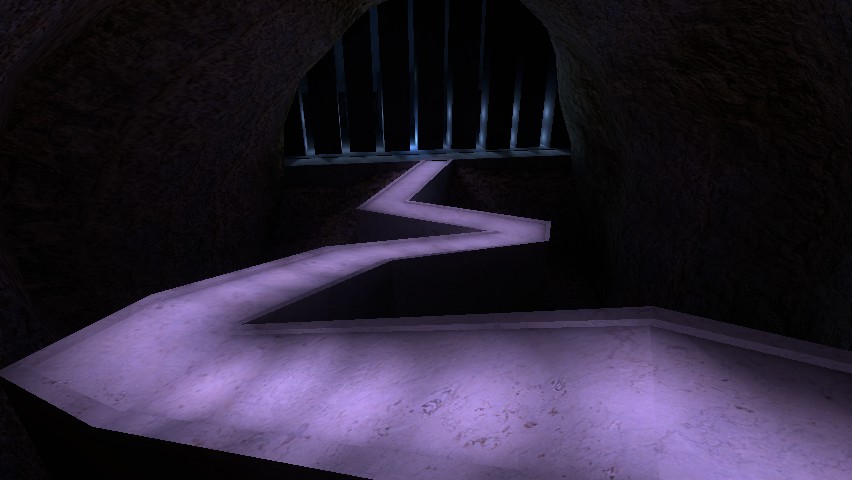
The *Epilogue* ("no man's land") finalizes this for me.
*Tower* is Coda's last game. That should be the last of the level geometry he built. Except it isn't.
After *Tower* we move seamlessly into new levels with new geometry.
The provenance of the geometry in the epilogue makes no sense in the literal reading, but fits completely as psychogeometry.
We are still working through Davey's psyche. These levels don't *need* to have been constructed by one of the characters in the story, and none of them ever really did.
/// aside | furthermore
#### Maybe the real Davey Wreden is here too...
This is a reminder that the real Davey Wreden's presence is still felt. The real person was still the designer of these scenes, and while Davey's narration tries to drown it out, the hand of Davey Wreden is still visible in the sound design and the design of the levels themselves.
The sound design ([Ryan Roth](https://dualryan.bandcamp.com/album/the-beginners-guide-soundtrack)) is the clearest example of this. It follows the level design, but it also follows Davey's commentary, showing it was crafted with an understanding of both. (Which, of course, it was.)
Behind Davey's voice, Davey Wreden gives his own commentary with ominous stings punctuating Davey's worst wrongdoing.
The music doesn't appear to be diegetic -- nowhere, in any of Davey's commentary, does he reference audio as part of his analysis of any of these games.
In addition to effectively creating the whole experience, the level design is also all masterful craftsmanship.
It's extremely well-made brushwork with none of the seams or misalignments you'd expect from a beginner learning Source.
In *Down*, Davey talks about how the Source engine is built for making boxy hallways right before having Coda present the player with a completely un-boxy, wild, abstract fall sequence. It's a little flourish.
///
### Metalepsis and physical presence
Davey has a physical presence in the game beyond commentary or narration.
*Intro* sets up the kayfabe of a Valve-style commentary track, but this fades away almost immediately. Davey "follows" you around the level and comments on your point of view and your vicinity.
He also directly reacts to your actions.
He'll give you hints if you seem stuck to him, something that implies a "him" present in the space.
Sequentially the commentary is continuous, with Davey progressing along a clean, linear journey with you.
(Contrast this with games like *Braid, Anniversary Edition* or any Valve title with commentary.)
Davey seems confined to a linear sequence in time, unable to change his earlier comments or make decisions about the presentation of the work based on his understanding in the epilogue.
Davey is acting as your guide through this space, and "comes with you" in a way beyond assembling this compilation.
This metalepsis violates the assumptions that underlie the literal reading, but strengthens the impressionism of the metaphorical framing.
The narrator is not quite someone showing you a game and not quite a publisher adding commentary to a collection. Davey, as we know him, is a train of thought we follow.
Borrowed observation: understanding this continuity and Davey as a less-than-omnipotent organizer also solves the problem of the game existing on Steam in the first place:
::: thread unified


Where the literal reading "breaks", the metaphorical reading resolves this contradiction by distinguishing Davey-the-persona from the publisher of the game.
### The Whisper Machine
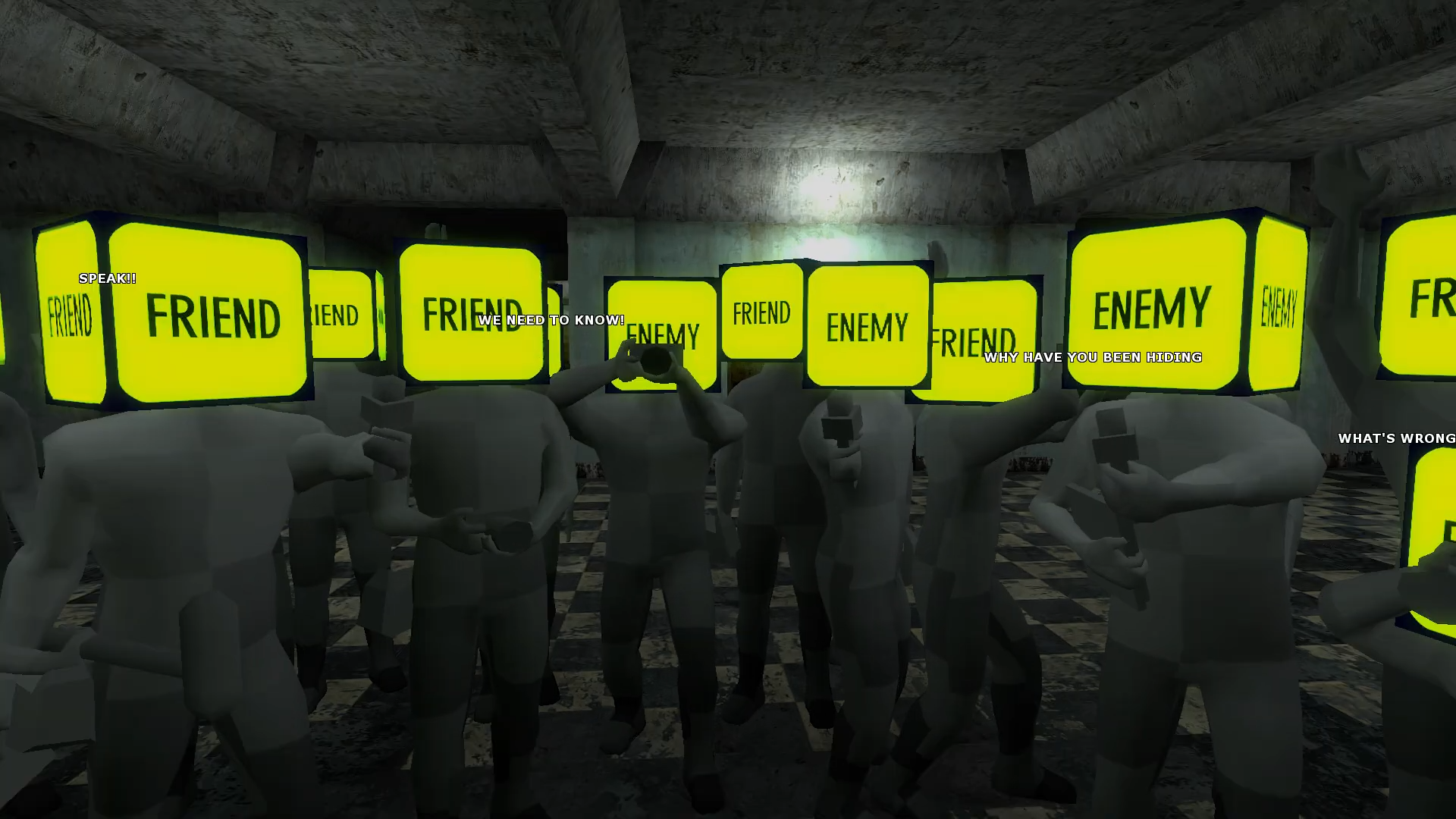
Key to Davey and Coda's relationship is their opposite relationships with feedback and their audience.
Davey is encouraged and motivated by positive feedback:
> **Davey in *Machine*:**{: .cite}
> When someone really connects with a thing that I've made, when they see themselves purely in my work, there's nothing that feels better.
> ...
> When they told me how much they enjoyed his games it was the best feeling, the absolute best feeling, it made me feel so happy.
> So beautifully, beautifully happy.
To Davey, feedback isn't just a metric he uses to steady himself, it's the end goal he's driving towards. External validation and approval is the reward.
Coda is the opposite.
Coda sees feedback as a danger.[^feedback-danger]
[^feedback-danger]:
This idea of public feedback being toxic parallels sentiments the real Davey Wreden has expressed about his own life:
> [Davey Wreden, "Game of the Year"](https://medium.com/@HelloCakebread/game-of-the-year-cb4214f98c13){: .cite}
> I tried, I did the best I knew how to do, but after a certain point the many little requests added up and their collective weight broke my back. I couldn’t do it any more. I couldn’t talk to more people. I couldn’t continue to use other peoples’ opinions of myself to feel good about myself and about my work. Every time I turned to someone else’s opinion of the game, I felt less sure of my own opinion of it. I began to forget why I liked the game. I was losing the thing I had created.
In *Whisper*, when the whisper machine is active, that puts the ship at risk of imminent destruction. The only way to prevent this is self-sacrifice, a kind of ego death.
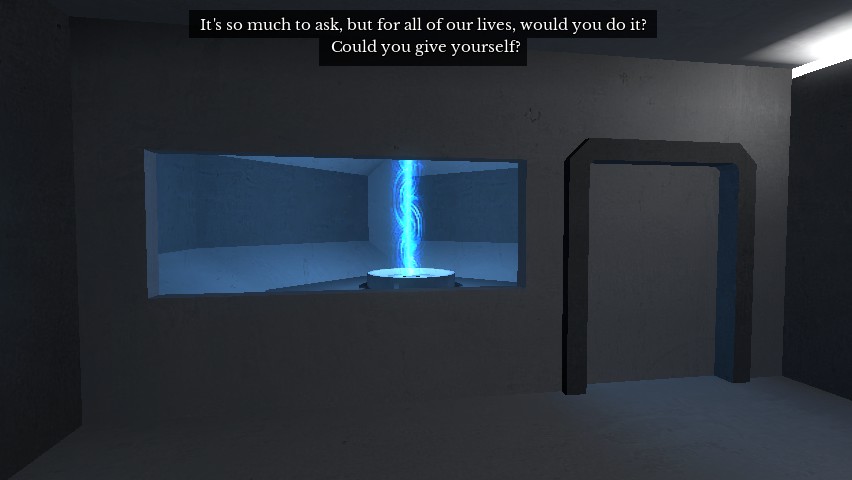
"Hostile alien lifeforms" can even be read as an allusion to feedback as the enemy, here. "Whisper Machine" sounds like equipment that would be part of the spaceship, and the signage implies this too. But exact nature of the threat (in the game) is unclear: the danger is a foreign threat, which is the same problem as the whisper machine.
The idea of "whispers" as a negative form of public feedback is a recurring theme in Coda's work.
*Notes* is a whole game about comments left by the public.
Davey thinks the notes represent Coda's thoughts and lonliness, but he's wrong -- they're player feedback, comments on the level itself.
These notes are mostly nonsense typical of inane internet comments. The audience tries to be clever, or make jokes, or offer conflicting interpretations of art.
At the end are clattering typewriters manned by no people, and demands that the author speak.
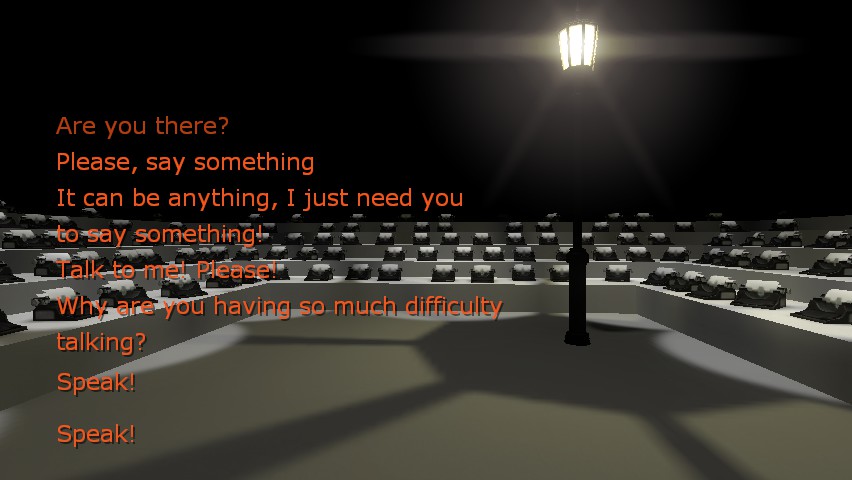
The environmental audio in *Notes* is whispering:


Although not whisper themed, *Theater* follows this same theme of public performance. You're guided into seemingly impossible demands of social performance.[^mobius-whispers]
[^mobius-whispers]:
*Mobius* is set on the S.S. Whisper, although this reference is more difficult to parse. *Mobius* is about honesty and rejecting denial. Denial doesn't do anything to save you, and the character needs to be honest with themselves about their creative lull.
This doesn't relate to the theme of whispers as clearly as the others.
The crew of the Whisper are all blind and impotent, so this may be another comment on whispers' lack of value.
In *Tower*, Coda talks about his privacy being something that keeps him safe:
> ***Tower*:**{: .cite}
> You've so infected my personal space that it's possible I did begin to plant 'solutions' in my work somewhere, hidden between games.
> ...
> Would you stop taking my games and showing them to people against my wishes?
> Giving them something that is not yours to give? Violating the one boundary that keeps me safe?
Within the metaphor, this is a comment on how relating to the public taints the creative process. The drive for approval and validation can stifle or destroy our internal engines that produce art for its own sake.
The danger to Coda is the mortifying ordeal of being observed.
And so *The Beginner's Guide* is about this internal struggle.
Having external fans and feedback irritates this conflict, and the artist needs to be mindful about how they handle it.
It's possible to give into the temptation to obsess over feedback and just seek to overdose on validation, and the story in *The Beginner's Guide* is about how bad that is.
I think this need for the author to fight against the instinct to be prideful is something the real Davey Wreden is very serious about. He's talked directly about his experience with -- like Davey -- caring too much about external validation, and how that led him to an overly-proud headspace that wasn't healthy.
> [Davey Wreden, "Playing Stories" (video)](https://www.youtube.com/watch?v=bKMAJ8vOMDg){: .cite}
> The thing that happened after the game came out that's the clearest and
> most painful memory of learning just how human I actually was shortly after the game came out.
> These guys from a slightly well-known gaming podcast contacted me about going on their show and doing an interview and
> I'm thinking to myself "yes, here it is I get to be center stage, finally. I will -- you know -- descend from my mountain and deliver the Commandments of game design to these peons" or whatever.
> I'd
> never been so excited for something to finally be given personal recognition.
>
> And I went on the podcast and the
> interview was like an hour and a half and oh my God I did not shut up. I just
> fucking talked and talked and talked and I think they got to ask me like six questions total. ... It was so bad, it was really really bad, and I got off the call and I just felt so empty so incredibly empty. ... It was like this was the one thing that I'd been waiting for and I so completely indulged myself in
> it with no wiggle room and I came away from it with no satisfaction whatsoever and it felt awful, like I'd been lied to. Like this thing that I had really wanted really wanted: to be interviewed and to be asked my opinions -- that it had given me no Comfort whatsoever.
>
> ... I had all
> these weird little quirks in the interview, like often times after saying something very snooty and pretentious about game
> design or life or whatever I would then say something to the effect of "but of course it's not like I'm a genius of
> game design", and then oftentimes after saying that I would follow it up with "but you know half a million people have
> played my game so you know I'm probably doing pretty good" -- oh, oh, it was really bad, very bad.
> ...
> Why did I make Stanley Parable? It's because I was alone. I felt very
> very alone. And it's not like I didn't have friends, you know, I had great friends, and yet the burning thing on my
> mind was the story of this man who's completely vastly alone.
> It wasn't enough just to have friends I wanted to be seen --
> I wanted to be liked for some much grander reason. I wanted to be told that I was great. I wanted to hear overhear a
> conversation on the bus "hey Davey Wreden got a new game out, what a genius, what a paragon of brilliant narrative design". I
> wanted to be made complete through the validation of someone else.
> [Tone Control 20: Davey Wreden (Audio)](https://soundcloud.com/idlethumbs/davey-wreden){: .cite}
> I put a lot of measures in places to make \[The Beginner's Guide] different than Stanley. I booked a flight out of Austin on a vacation for two days after the game came out. I got myself away for like three weeks, I had that set up. I didn't look at my emails, I forbade myself from looking at any press or anything, I didn't do any interviews. ... I set it up to be as simple as possible, and it was by miles and miles and miles more healthy and easier for me than launching Stanley Parable but that was by design. That was taking everything about Stanley that had come back to bite me and trying to reverse-engineer it. ... The real practical nuts-and-bolts reality is I got the fuck out of there.
I respect Wreden a lot for this.
### The two door puzzle
I remember first seeing the door, ten years ago, and instantly understanding it.
It was like it was speaking eloquently to me in a perfect blend of languages I all knew.
It was a perfect synthesis of an abstract idea that needed words and the substrate of geometry to communicate it without them. It is a poem.
No one ever talks about the doors. I don't know why. I'm not so proud to think I'm the only one to feel my interpretation, so I'm tempted to think people choose not to talk about it because it seems so clear. Or maybe *The Beginner's Guide* is so full of questions and ideas to obsess about the doors get left behind. Maybe this ability to move our focus is another trick of the game.
The door is a trust fall. It is jumping blind and not knowing what will catch you.
The first lever teaches you the door. You know the lever opens and closes the door. And then, when you reach the black space, you realize you can still reach it. You know you won't be able to open that door again, but if you want, you can trap yourself in the dark space.
The puzzle tells you there might be a way forward if you lock yourself in the dark. The language of game design tells us there must be. The language of the door does not. You do not know there is a way forward before you close the door.[^door-unknown]
You can imagine and hope where a new switch might appear, but as soon as you close the door you're at the mercy of the unknown. You can rely on your ability to trap yourself, you cannot rely on your ability to move forward after.
[^door-unknown]:
Unless you wait long enough, in which case Davey ruins it for you.
> **Davey in *Puzzle*:**{: .cite}
> Alright let me just walk you through it.
> You're going to hit the switch on the outside to open the door, then hit the same switch and walk through the door before it closes.
> You'll see a second switch on the inside, which will open the second door.
The puzzle appears a few times, played straight. You learn to close doors on yourself in the hope that a way forward will present itself on the other side of each door. Inevitably, one does not. When this happens it doesn't subvert your expectations, and you can't bring yourself to feel cheated. This possibility had been telegraphed from the beginning, and you always knew what you were risking.
The two door puzzle is part of Coda's long meditation on the idea of transition.
It's a physical manifestation of the idea that moving forward isn't safe.
This is an elaboration on the themes in *Backwards*, of moving without knowledge of where the steps will go or how the world will move around you.
You're forced to take a leap of faith, to move in a direction without confidence that you know what's ahead. In *Backwards* these changes are a surprise since you can see the future when you're not moving, but with the two doors puzzle the possibility of a world where you can move forward only really exists in your mind, until after it's confirmed.
The door is about the uncertainty of transition. When you close the door you know you're "closing the door" on one section, but you don't know that you'll be able to move forward. Only after you've closed the door do you get the chance to open the next one.
Coda's games talk a lot about the puzzle.
In *Down*, the first dialogue room is a conversation with people desparate to be able to get through the puzzle, to "escape this prison". They understand the puzzle as a door keeping them trapped.
If you try to explain it, you can't. You can't articulate how you got through, and leave the room without helping them.
Likewise the *Escape* series is about the necessity of transition; the desparation to escape a miserable state and the desire to be guided through a process you can't even imagine yet.
The second dialogue room in *Down* is a conversation with people who care about the black space instead.
> I suggest you go and see the puzzle some time. It's not meant to be solved, but you can sit in the black space in the middle.
>
> Q: Who are you?
> A: Just go hang out there in that blackness for a bit. You may not like it at first, but it'll grow on you. Eventually.
>
> Q: What happens if I solve it?
> A: Not sure. But if I have any suspicion, what you find won't be worth what it takes to get there. You'll have another chance to see it soon.
>
> Q: I don't recall a space between the doors...
> A: Don't worry, I'm sure you will visit it again soon. Be sure to pay close attention.
In Coda's later games the door takes an almost antagonistic role.
In *Mobius*, you're about to hit the door, which is the failure state. You have to find a way to stop, or you crash.
In *Island*, you're able to walk someone else through the puzzle for the first time. This is supposed to lead to the machine, but doesn't -- you're forced to undercut your work in *Mobius* and fall back into speaking denials.
In *Machine*, attacking the machine's work cuts the ground out from under and you take a long, inevitable fall into the door.
The puzzle door is a coda. It's an ending to one section, and sometimes the beginning of another.
A coda is also the ending of a loop. Once the loop ends, you jump to the coda and move on from there.
We see that -- or would have seen that -- in *House*.
In *House*, comfortable, relaxing busywork fills the space between doors.
It reads as a blunt statement: staying still -- staying home -- can fill your time and energy with comfortable work, but it's at the expense of "development", movement forward.
But it's comfortable, and there's value in housekeeping. "If you're finding the work hard, maybe you have a bit of housekeeping to do before you come to work. Ha!"
Davey tends toward "solving" the door, Coda doesn't.
> **Davey in *House*:**{: .cite}
> Again, you can't stay in the dark space for too long. You just can't, you have to keep moving, it's how you stay alive.
> Which is the whole point of the puzzle doors, right? That sooner or later you have to pick up and move. I really thought that was the point of it.
Coda's *House* looped, Davey's didn't. Maybe Coda is more comfortable with sometimes enjoying the present moment than Davey is.
### Meditation
The Beginner's Guide loves juxtaposition. It throws out little contradictory themes for us to ruminate on.
The maze in *Whisper* first shows the difficulty of the maze from the inside, then shows the view from above as one pattern.
"Being inside" is hard and painful, and "seeing from outside" is easy and beautiful. This is the inverse of *Stairs*, where the hard journey is on the outside trying to penetrate in. And *Stairs* in turn is an inverse of *Puzzle* -- as Davey notes, a stark interior hides a complex exterior.
Within *Down*, the first conversation tree is in argument with the second.
The tension between needing to transition (*Escape*, *Down*) and not wanting to transition (*House*, *Mobius*). Et cetera.
This is the difference between thesis and meditation. A thesis attempts to make an argument in one particular direction. A meditation explores the tension between different directions. Contradiction is poison to a thesis, but is the fuel needed for meditation. The differing arguments provide higher dimensionality to the space,[^correctness-in-meditation] and juxtaposing them provides the reader opportunity to explore the space beyond any single vector that defines it. It is a joy in difficulty, taken in navigating something complex.
[^correctness-in-meditation]: This is not to argue that there's merit in imagining a complex argument where one should not exist. Many topics are a matter of separating correct and incorrect understandings, and so call for thesis. In these cases, the "just asking questions" approach serves to create a debate where there is no room for one, and so only serves to legitimize error.
## Fractal
One last reading. One more layer of abstraction.
Davey and Coda aren't just two sides of a person, they're two sides of the archetype of an artist. And that artist writing stories about themself creates a fractal.
The creative process goes off the rails and starts describing itself, and describing itself describing itself recursively.
As you focus inward you find the same shape again, smaller: the same tension between making a thing and showing it, the same two figures circling each other, repeating at every scale.
This is a *mise en abyme*; a work placed within itself, creating an infinite regress that echoes the same relationship at every layer of interpretation.
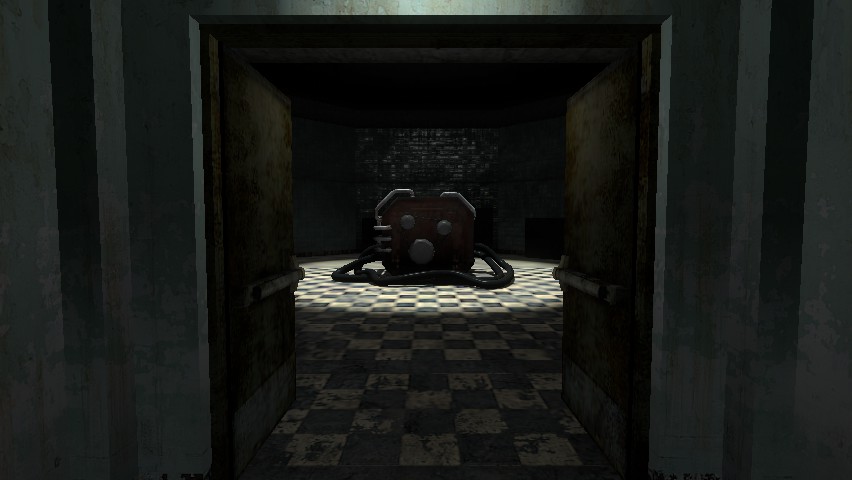
### Relationships
This story is about the relationship between a person and the creative ideas they access.
There are two basic expressions of this same relationship: an artist and their internal creative drive, and a person and the artists they listen to.
In the literal reading this is the relationship between Davey and Coda, as characters.
Davey sees Coda as his source of creative inspiration, the person supplying him with artistic meaning.
(Davey is a game developer in this story too, don't forget. Even in character, he released The Stanley Parable, and met Coda at a game jam.)
Coda is Davey's source of inspiration, his muse, his creative engine.
Coda is generative, Davey is consumptive.
In the metaphorical reading this is the relationship between Davey and his creative drive, as seen metaphorically in Coda. Coda is a personification of Davey's source of creative inspiration, the drive supplying him with artistic meaning.
Davey and Coda represent the struggle between a person and their creative drive.
Coda is generative, Davey is consumptive.
In Coda's stories, this is the relationship between the protagonist and the machine.
Coda's stories are about an artist and their relationship to their creative drive, externalized as the machine.
Coda and the machine represent the struggle between a person and their creative drive.
The machine is generative, the protagonist is consumptive.
And this is the most interesting part of the fractal, because now this aspect of Coda's work isn't just there to be misunderstood and victimized, it can speak directly to the themes of *The Beginner's Guide*.
Coda has an ongoing story about a woman experiencing creative burnout, with her creative drive externalized as a machine. But it's stopped:
> ***Island*:**{: .cite}
> What's wrong? You look lost.
>
> I'm completely out of ideas.
> OR When I try to create I feel empty.
> OR I have nothing left to give to my work.
>
> Oh no! What's happened? Did something change?
>
> I'm trying to find this engine that used to protect me, to start it again.
> OR There was a machine that kept me going, and it stopped.
> ...
> I need to see it, to know why it stopped.
In *Island*, you're taken to where the machine is supposed to be[^presence-unused], and when you get there you're made to lie, and "say that game development is simple and joyous and that you love it 100% of the time."
It's a story about trying to fill the void with denial.
[^presence-unused]: There's also [an unused version of *Island* that doesn't mention the machine at all.](./unused_presence.svg)
In *Machine*, we (as The Woman) face the machine, and it's our Coda too.
In *Machine* you finally interrogate the machine. You make a series of demands[^tree-machine] that it apologize to you, and to the audience:
[^tree-machine]: [Dialogue tree for *Machine*](./machine1.svg). There's also [a much more complex unused dialogue tree for *Machine* that's very different.](./unused_machine2.svg)
> ***Machine*:**{: .cite}
> You stopped.
>
> You stopped feeding us.
> OR Your work was keeping us alive.
> OR Your work was keeping us healthy.
>
> It was only because of your creations that any of us could make it through, every day.
> I've been so alone.
> Apologize for leaving me.
And in this dynamic, the machine -- your machine -- is called Coda.
> **Guard in *Machine*:**{: .cite}
> Ma'am! Glad to see you've arrived safely.
> We've captured The Machine, it's waiting for you now.
> You can begin the interrogation whenever you like.
> ...
> Also, one more thing that you should know about the machine:
> It calls itself Coda.
Perhaps, in the literal reading, this was autobiographical: Coda talking about how he feels perceived by others, or Davey.
But this makes me imagine "coda" as being a nickname for this kind of relationship. "Coda" as Davey's coda, but the machine as the woman's coda. This transformation of "coda" into a role gives visibility to the fractal pattern.
The author dots are in *The Stanley Parable*[^standot] because Coda isn't just a *The Beginner's Guide* character, he's an idea.
[^standot]: 
### Self-referentiality
This echoes everywhere, through every reading of *The Beginner's Guide*.
There's a hall of mirrors effect. As soon as this dynamic is constructed you can see it infinitely in both directions.
There is something about this that is a corruption; this self-referentiality poisons the creative well.
If *The Stanley Parable* is about the joy of metanarrative, *The Beginner's Guide* is about metanarrative as a deleterious spiral.
To Davey, Coda's work becomes disturbing because all it can talk about is this fractal.
Coda isn't talking about anything except not being able to write games unless they're about that paradox.
> **Davey in *Mobius*:**{: .cite}
> First off, he's never been this explicit in his work about exactly what he's thinking. So where's that coming from?
> But then even weirder, his work has potentially stopped being an outlet for him.
> Not like he's having trouble iterating on ideas, but he literally just can't think of new ideas any more.
This is repeated throughout the fractal.
In *Machine*, the press accuses the machine of producing "toxic" games. The problem isn't just that it stopped, it's that the ideas it's producing have become wrong.
There is something about the strange loop that has corrupted itself with introspection.
Something has broken, and now the creative engines can only produce games that are stories about creative engines that are broken in this strange way.
### Following the fractal outward
But the fractal doesn't end there; the hall of mirrors can be followed outward, too.
As above, so below.
This metanarrative implies the entire game, *The Beginner's Guide*, was created by someone expressing a creative frustration by writing a game about peoples' creative frustrations. And, of course, it was.
So let's answer that question. How do you express this?
What happens when you have this strange loop?
What happens to Coda when his source, the machine, starts outputting something "toxic"? What happens to Davey when his source, Coda, stops making Counter-Strike maps and starts writing games about stress and creative lulls?
What happens when your drive to create becomes self-obsessed with the difficulties of creation?
Maybe you acknowledge it. See the difficulty, express the difficulty and what it means to you, and keep going.
Maybe you find a way to share [something that is True](https://medium.com/@HelloCakebread/game-of-the-year-cb4214f98c13).
Maybe you make *The Beginner's Guide*.
## Related Reading
/// html | div.related-reading
- [The Beginner's Guide Script](https://docs.google.com/document/d/1C3INE3FlfzxsDY_BT1uO_l6SLIelBV04kJgoFoEyVJs/) (transcribed by [/u/mgd14of14_](https://www.reddit.com/r/beginnersguide/comments/etvf1q/full_script_update/))
- [Patrick Klepek, "The Controversy Over A Video Game’s Suggestion Of A Crime"](https://kotaku.com/the-controversy-over-a-video-games-suggestion-of-a-crim-1749448664)
- [Sufficiently Human, "The Customer is Often Wrong (FUCK THE PLAYER)"](http://web.archive.org/web/20210316001935/https://sufficientlyhuman.com/archives/599)
- [Brendan Keogh, "On The Beginner’s Guide"](https://brkeogh.com/2015/10/03/on-the-beginners-gude/)
- [Big Joel, "The Beginner's Guide: The Death of the Critic" (Video)](https://www.youtube.com/watch?v=mN4vAD-jqOo)
- [Tone Control 20: Davey Wreden (Audio)](https://soundcloud.com/idlethumbs/davey-wreden)
- [Nasrullah Mambrol, "Intentional Fallacy"](https://literariness.org/2016/03/17/intentional-fallacy/)
- [Davey Wreden, "Game of the Year"](https://medium.com/@HelloCakebread/game-of-the-year-cb4214f98c13)
- [Davey Wreden, "Instructional Guide for The Stanley Parable" (An instructional guide for beginners)](https://www.youtube.com/watch?v=j428LmPx9tc)
- [Davey Wreden, "Wanderstop and Cozy Games" (video)](https://www.youtube.com/watch?v=IVetaNhp2a8)
- [Aaron Suduiko, "Video Game Structural Aesthetics: Why "The Beginner's Guide" is Masterfully Confusing"](https://withaterriblefate.com/2015/11/13/video-game-structural-aesthetics-why-the-beginners-guide-is-masterfully-confusing/)
- [Laura Mandanas, "The Beginner’s Guide Is Brilliant, Horrifying, Secretly Feminist"](https://www.autostraddle.com/the-beginners-guide-is-brilliant-horrifying-secretly-feminist-310119/)
- [Carolyn Petit, "the game is not yours: thoughts on the beginner’s guide"](https://carolynpetit.tumblr.com/post/130376005340/the-game-is-not-yours-thoughts-on-the-beginners)
- [Cameron Kunzelman, "The Beginner's Guide: Good Evening"](https://www.avclub.com/the-beginners-guide-review-good-evening)
- [Davey Wreden, "Playing Stories" (video)](https://www.youtube.com/watch?v=bKMAJ8vOMDg)
- [Christopher Byrd, "The Game Designer Playing Through His Own Psyche"](https://www.newyorker.com/culture/persons-of-interest/the-game-designer-playing-through-his-own-psyche)
///
[Okay and here are all the dialogue trees](./trees.html)
